
The AI Blogging Shift
Blogging is changing rapidly. Just a few years ago, using AI for content creation seemed far-fetched. Many bloggers worried about losing their voice or producing inauthentic work. Today, tools like advanced AI models are becoming essential for anyone looking to scale their blog and reach a wider audience.
Content demand is accelerating. Readers want fresh perspectives and consistent updates, a pace that's challenging for individual bloggers or small teams. AI isn't about replacing bloggers; it augments our abilities, handles tedious tasks, and frees us to focus on strategy, creativity, and community.
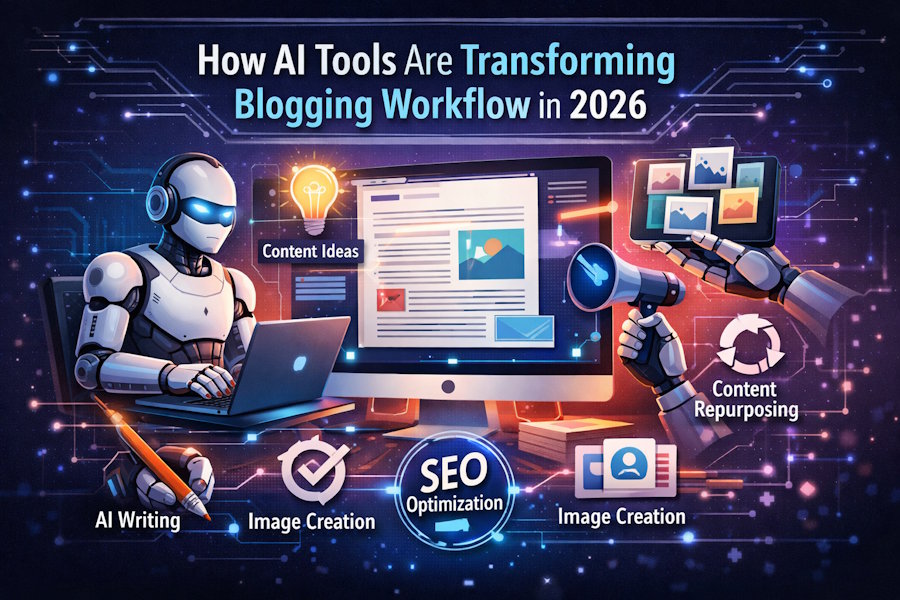
Bloggers are shifting their content creation approach. It's less about staring at a blank page and more about collaborating with AI to generate ideas, refine drafts, and optimize content for search. Platforms like RightBlogger curate AI tool roundups, showing the options available for everything from idea generation to social media scheduling – a clear signal of AI's growing role in blogging.
AI-powered content creation is here to stay. Those who embrace it will be best positioned to thrive in the competitive blogging world. The question now isn’t if you should use AI, but how.
ChatGPT-5: Beyond Text Generation
This advanced AI model represents a significant leap forward. While earlier versions generated passable text, this model demonstrates a deeper understanding of nuance, context, and brand voice. It's about crafting content that resonates with your target audience and reflects your unique personality.
Bloggers use this AI for more than writing full articles. It's a powerful tool for brainstorming blog post ideas, generating headlines, and creating outlines. It assists with keyword research, suggesting terms to optimize content for search. Many use it to write social media copy, crafting engaging posts to promote articles.
Image prompt generation is a really interesting application. Bloggers describe the image they want, and the AI creates a detailed prompt for tools like Midjourney or DALL-E 3, saving time and ensuring visuals complement content. Its ability to adapt to a blogger’s existing style is a huge benefit; you can "train" it on past articles to mimic your tone and vocabulary.
Maintaining originality is a key challenge. It's easy for this AI to produce generic or repetitive content. Bloggers must refine the output, adding their own insights, anecdotes, and unique perspectives. View it as a starting point, not a finished product. It's a powerful assistant, but requires human direction and editing.
- Brainstorming: Generating blog post ideas and angles.
- Outlining: Creating structured outlines for longer articles.
- Keyword Research: Identifying relevant keywords for SEO.
- Social Media Copy: Writing engaging posts for promotion.
- Image Prompts: Generating detailed prompts for AI image generators.
Claude 4: The Long-Form Champion
While one AI excels at versatility, another has carved out a niche for long-form content. Its strength is handling complex reasoning and maintaining coherence over extended texts, making it well-suited for in-depth guides, comprehensive articles, and research-heavy pieces.
Bloggers find this AI less prone to repetition than previous models. When writing a 3,000-word guide, it can maintain a consistent tone and avoid rehashing points, saving editing time and ensuring a smooth, logical flow.
This AI likely performs well in niches demanding accuracy and detail, such as travel or personal finance. Its ability to synthesize large amounts of information and present it clearly is invaluable in these fields. Imagine using it to create a detailed travel itinerary, complete with historical context and practical tips.
However, this AI isn’t without limitations. Some users report it can be overly verbose or generate overly cautious language. Like all AI models, it can sometimes produce inaccurate information. Rigorous fact-checking is always essential.
ChatGPT-5 vs. Claude 4 for Bloggers
| Content Length | Nuance & Creativity | Factuality & Research | Ease of Use | Best For |
|---|---|---|---|---|
| ChatGPT-5: Excels at generating concise, engaging content; better for shorter blog posts and social media copy. | ChatGPT-5: Demonstrates a strong ability to mimic different writing styles and generate creative text formats. | ChatGPT-5: Requires careful fact-checking; prone to occasional inaccuracies, especially on complex topics. | ChatGPT-5: Generally considered user-friendly with a widely accessible interface. | Quick content generation, brainstorming, and drafting creative pieces. |
| Claude 4: Stronger for in-depth articles and long-form content requiring detailed explanations. | Claude 4: Exhibits a more subtle understanding of context and can produce nuanced arguments. | Claude 4: Generally known for superior factuality and a lower tendency to 'hallucinate' information. | Claude 4: Interface may have a slightly steeper learning curve for some users. | Long-form articles, research-heavy topics, and content demanding high accuracy. |
| ChatGPT-5: Offers a wider range of readily available plugins and integrations. | ChatGPT-5: More adaptable to playful or informal tones, suitable for lifestyle blogs. | ChatGPT-5: May require more iterative prompting to achieve desired levels of accuracy. | ChatGPT-5: Benefits from a large user community and extensive online resources. | Lifestyle, entertainment, and quick-turnaround content. |
| Claude 4: Stronger at processing and summarizing large documents and datasets. | Claude 4: More adept at maintaining a consistent tone and voice throughout longer pieces. | Claude 4: Excels at tasks requiring careful analysis and synthesis of information. | Claude 4: Focuses on clarity and directness in its responses. | Technical writing, in-depth analysis, and content requiring strong source attribution. |
| ChatGPT-5: Faster response times for shorter prompts. | ChatGPT-5: Can be more easily prompted to adopt specific personas. | ChatGPT-5: Factuality is improving with each iteration, but still requires vigilance. | ChatGPT-5: More widely integrated into various content creation tools. | Generating multiple content variations quickly. |
| Claude 4: Better at handling complex, multi-layered prompts. | Claude 4: Demonstrates a greater capacity for logical reasoning and problem-solving. | Claude 4: Generally produces more reliable and verifiable information. | Claude 4: May require more detailed prompts to achieve specific outcomes. | Content requiring high levels of accuracy and logical consistency. |
Qualitative comparison based on the article research brief. Confirm current product details in the official docs before making implementation choices.
Workflow Integration: AI as a Team Member
Successful bloggers aren't asking AI to write entire articles. They integrate these tools into existing workflows, streamlining tasks and enhancing content creation. Treat AI as a team member, not a replacement.
Prompt engineering is critical. Output quality depends entirely on input quality. Learning to craft effective prompts – clear, concise, and specific – pays dividends. Instead of asking "Write a blog post about travel,’ try ‘Write a 500-word blog post about budget travel in Southeast Asia, targeting backpackers aged 18-25, with a focus on cultural experiences."
AI can assist with every stage: research (gathering data and sources), outlining (creating structure), drafting (generating text), editing (improving grammar and clarity), and optimization (incorporating keywords and meta descriptions). For example, use one AI to generate a draft, another to refine it for length and coherence, and a dedicated SEO tool to optimize it for search.
Human oversight remains essential. AI-generated content must be fact-checked, edited, and infused with your unique voice and perspective. Add your own insights, anecdotes, and personal experiences. AI handles the heavy lifting, but you add the human touch that makes your blog stand out.
AI can help with SEO. Tools suggest relevant keywords, analyze competitor content, and generate meta descriptions. However, SEO is constantly evolving, and Google’s algorithms are sophisticated. Relying solely on AI for SEO is risky.
Niche-Specific AI Applications
AI's versatility is its beauty. Different blogging niches find unique ways to leverage these tools. It's not a one-size-fits-all solution; the best approach varies by audience and content goals.
Fashion bloggers use AI to generate outfit ideas based on trends, write product descriptions, and create personalized style recommendations. Travel bloggers use AI to create detailed itineraries, translate content, and research local attractions. One blogger used AI to generate a list of hidden gems in Rome, which they then verified and expanded upon with their own experiences.
Food bloggers are experimenting with AI to develop new recipes, write restaurant reviews, and generate engaging social media captions. Beauty bloggers are using AI to create skincare routines, recommend makeup tutorials, and analyze product ingredients. On Blogger Secret, we’ve seen examples of interior design bloggers using AI to generate room layout ideas and suggest color palettes.
The key is to think creatively about how AI can solve specific problems or enhance your existing content. Don’t be afraid to experiment and try new things. The possibilities are endless.
AI Use Cases by Blogging Niche
- Travel - Generating detailed travel itineraries, creating compelling destination descriptions, drafting email newsletters with travel deals, translating blog posts for wider reach, and assisting with customer service inquiries related to travel planning.
- Food & Recipe - Developing unique recipe ideas based on dietary restrictions or ingredient preferences, writing engaging recipe introductions and blog post narratives, creating shopping lists from recipes, generating social media content showcasing food photography, and optimizing recipes for SEO.
- Fashion - Generating outfit ideas based on current trends or specific occasions, writing product descriptions for affiliate marketing, drafting blog posts about fashion history or styling tips, creating personalized style guides for readers, and analyzing fashion trends from social media data.
- Lifestyle - Brainstorming blog post topics related to personal development or hobbies, drafting articles on mindfulness or productivity, creating checklists and guides for daily routines, assisting with editing and proofreading blog content, and generating ideas for social media challenges or prompts.
- Beauty - Creating personalized skincare routines based on skin type and concerns, writing product reviews and comparisons, generating blog posts on makeup tutorials or beauty trends, drafting social media captions for beauty product photos, and assisting with responding to reader questions about beauty products.
- Personal Finance - Summarizing complex financial topics into easy-to-understand blog posts, generating ideas for budgeting tips or investment strategies, drafting articles on saving money or debt management, creating financial calculators or tools (integrated via APIs), and assisting with researching financial products.
- Home & Decor - Generating room design ideas based on user preferences, writing descriptions for home decor products, drafting blog posts on interior design trends, creating shopping lists for home renovation projects, and assisting with visualizing room layouts (through integration with image generation tools).
- Health & Wellness - Drafting informative articles on health topics (reviewed by medical professionals), creating workout plans tailored to fitness levels, generating meal plans based on dietary needs, assisting with researching health-related information, and drafting content for wellness challenges or programs.
Avoiding AI Pitfalls: Originality & SEO
Relying too heavily on AI can lead to several pitfalls, the most significant being the creation of generic, unoriginal content. If your blog posts all sound the same, they’re unlikely to attract a loyal audience or rank well in search results. Google and other search engines are constantly evolving to detect AI-generated content, and they’re prioritizing high-quality, original work.
Fact-checking is absolutely crucial. AI models can sometimes produce inaccurate or misleading information. Always verify the information generated by AI before publishing it. Plagiarism is another serious concern. While AI models don’t intentionally plagiarize, they can sometimes generate content that is too similar to existing sources.
To maintain originality, focus on adding your own unique voice, perspective, and expertise. Use AI as a starting point, but always refine and personalize the output. Incorporate personal anecdotes, case studies, and original research. Don’t be afraid to challenge conventional wisdom and offer fresh insights.
Consider using AI detection tools to assess the originality of your content. While these tools aren’t perfect, they can provide a helpful indicator of potential issues. Ultimately, the best way to avoid AI pitfalls is to prioritize quality, originality, and human oversight.
The Future of AI & Blogging: 2026 and Beyond
Looking ahead to 2026 and beyond, the role of AI in blogging will only continue to grow. We can expect to see even more sophisticated AI models, capable of generating higher-quality, more nuanced content. ChatGPT-6 and Claude 5 will likely offer improved factuality, better understanding of context, and even greater customization options.
I anticipate that we’ll see more personalized AI tools tailored to specific niches. Imagine an AI assistant specifically designed for food bloggers, capable of generating recipes, writing restaurant reviews, and optimizing content for food-related keywords. Or an AI tool for travel bloggers that can create detailed itineraries and translate content into multiple languages.
The integration of AI with other technologies, such as virtual reality and augmented reality, could also open up new possibilities for content creation. Imagine creating immersive blog posts that allow readers to experience a destination or product firsthand. However, maintaining ethical considerations and transparency will be of paramount importance.
While the future is uncertain, one thing is clear: AI has the potential to empower bloggers and help them create even more engaging and valuable content. By embracing these tools and using them responsibly, bloggers can unlock new levels of creativity, efficiency, and success. It’s an exciting time to be in this industry.




No comments yet. Be the first to share your thoughts!