

The Blogger Secret: How We Picked These 5 AI Hacks
Finding reliable AI tools for Blogger can feel like searching for a needle in a haystack. Many "hacks" promise the moon but deliver clunky plugins that slow down your site or break your layout. We filtered out the noise to give you five actionable, AI-driven strategies that actually work with Blogger's platform.
Our selection process focused on practical utility over hype. We prioritized tools that integrate smoothly with Blogger’s interface, require minimal technical setup, and offer measurable time savings. Each hack was tested for compatibility with Blogger’s template system and its current SEO capabilities. We avoided generic advice, focusing instead on specific workflows that boost your online presence without compromising your site’s speed or user experience.
5 AI-Driven Content Creation Hacks to Boost Your Online Presence
AI tools have moved past novelty, offering concrete leverage for Blogger creators willing to integrate them into their workflow. These five hacks focus on specific, actionable steps to streamline content production and amplify your reach in 2026.
-

AI-powered keyword research tools
Use AI to uncover low-competition long-tail keywords that traditional tools miss. Analyze search intent patterns to identify content gaps in the health and beauty niche. This approach targets specific queries like "best non-toxic moisturizer for sensitive skin" rather than broad terms. By focusing on these precise phrases, you attract highly engaged readers who are ready to convert, driving qualified traffic without competing against massive authority sites for generic terms. -

Automated blog post drafting assistants
Leverage AI drafting tools to overcome writer’s block and structure your initial outlines efficiently. Input your core topic and key points to generate a coherent first draft that you can then refine with your unique voice and expertise. This method accelerates the creation process, allowing you to publish more frequently. Focus your human effort on adding personal anecdotes, checking factual accuracy, and ensuring the tone resonates with your specific audience’s needs. -

Smart image generation for posts
Create unique, custom visuals using AI image generators to enhance engagement and brand identity. Generate specific graphics that match your article’s context, such as infographics or stylized product shots, avoiding generic stock photos. This ensures your content stands out visually and aligns perfectly with your brand’s aesthetic. Unique images also improve user experience and can increase time-on-page, signaling quality to search engines and encouraging social shares. -
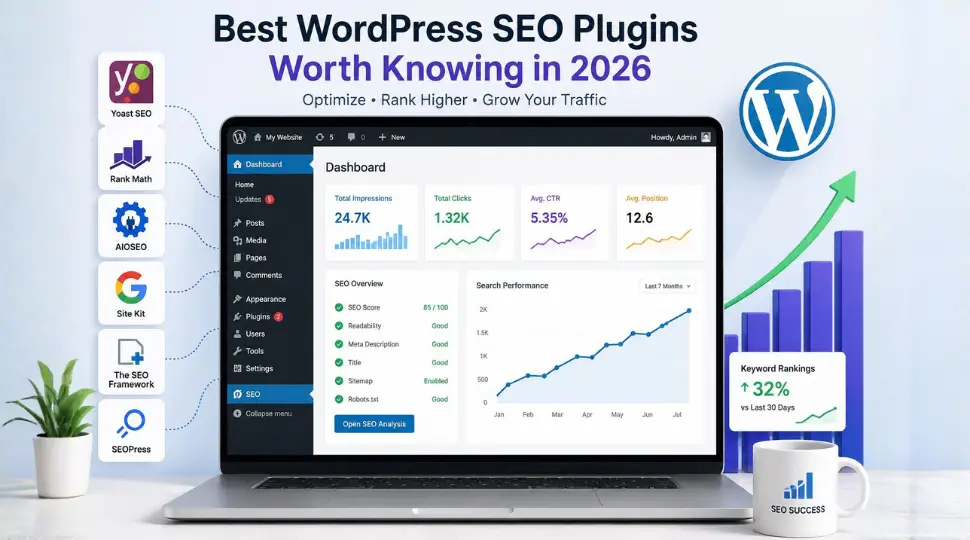
SEO optimization plugins for Blogger
Install specialized SEO plugins to automate meta tag creation, sitemap updates, and internal linking suggestions. These tools help you maintain technical SEO health without deep coding knowledge. They analyze your content for readability, keyword density, and mobile-friendliness, providing actionable recommendations. By addressing these technical elements consistently, you improve your site’s crawlability and indexation rate, ensuring your valuable content reaches search engine results pages effectively. -
Content repurposing automation scripts
Use automation scripts to transform existing blog posts into social media snippets, newsletters, or video outlines. This maximizes the ROI of your original research and writing efforts. By systematically breaking down long-form content into bite-sized pieces, you extend your content’s lifespan and reach across multiple platforms. This strategy keeps your audience engaged with fresh variations of your core message without requiring you to create entirely new topics from scratch.
Pick the right fit
Choosing a platform or tool isn’t about finding the “best” one; it’s about matching your workflow to your actual constraints. Many bloggers waste weeks testing tools that promise AI magic but require a technical skill set they don’t have. The goal is to find a stack that feels invisible—so you can focus on writing, not troubleshooting.
1. Define your privacy and anonymity needs
If your health or beauty niche requires discretion, start by determining how much of your identity you are willing to share. Anonymous blogging is possible, but it adds layers of complexity to monetization and SEO. Ask yourself if you need a pseudonym, a separate email, or a hidden WHOIS record. If you plan to build a personal brand, transparency usually wins. If you are sharing sensitive health stories, prioritize platforms that allow robust data privacy controls.
2. Match AI capabilities to your content type
Not all AI tools are built for the same job. Some excel at generating SEO-friendly outlines, while others are better at editing tone or repurposing long-form posts into social snippets. For beauty and health content, accuracy is non-negotiable. Avoid tools that hallucinate medical advice. Instead, look for AI assistants that help with structure, keyword integration, or grammar correction, leaving the factual health claims to you or verified sources.
3. Evaluate the learning curve vs. speed
A powerful tool is useless if it takes three hours to learn. When evaluating platforms, look for a “time-to-first-post” metric. Can you publish a clean, formatted post within 15 minutes? If a platform requires you to learn CSS, manage plugins, or configure complex APIs, it might be overkill. For most bloggers, a simple editor with basic AI integration offers the best return on investment. Save the complex tools for when you have a team or a specific technical bottleneck.
4. Check for seamless integration
Your content ecosystem should flow, not fracture. If your AI writer exports to Markdown, but your blogging platform requires HTML, you are creating friction. Look for tools that integrate directly with your CMS or offer one-click publishing. This is especially important for health and beauty bloggers who might need to schedule posts across multiple channels. A unified dashboard saves hours per week and reduces the risk of formatting errors.
5. Test the cost against your revenue model
Free tiers are great for starting, but they often limit AI usage or add watermarks. As you scale, calculate the cost per published post. If an AI tool costs $50/month but helps you publish 20 extra posts that drive affiliate revenue, it pays for itself. However, if it only speeds up drafting by 10%, it might not be worth the subscription. Start with a free trial, measure your actual output increase, and only upgrade if the math works.
| Criteria | Low-Tech / Free | High-Tech / Paid |
|---|---|---|
| Privacy | Often limited or public | Advanced controls available |
| AI Accuracy | Basic, prone to errors | Fine-tuned for niche |
| Learning Curve | Steep, requires setup | Streamlined, guided |
| Cost | Free or ad-supported | Monthly subscription |
| Integration | Manual export/import | One-click sync |



As an Amazon Associate, we may earn from qualifying purchases.
Frequently asked: what to check next
Does anyone still use Blogger? Yes. While newer platforms like WordPress and Substack dominate the conversation, Blogger remains a viable option for hobbyists and niche writers who want a free, no-frills publishing environment. It is particularly useful for those testing AI-driven content workflows without needing complex hosting setups. However, it lacks the advanced customization features that professional brands typically require.
How much money does 1000 views make on Blogger? Earnings vary significantly based on your niche, audience location, and ad performance. On average, bloggers earn between $2 and $10 per 1,000 page views through Google AdSense. High-value niches like finance or technology can push this higher, while general lifestyle or personal blogs often sit at the lower end. Consistent traffic volume matters more than single post virality for steady income.
Can I blog without revealing my identity? Absolutely. Many successful writers operate under pseudonyms or brand names to protect their privacy. To do this, you should use a dedicated email address, avoid linking personal social media profiles, and consider using a private domain registrar to hide your personal contact information from public WHOIS databases. This approach allows you to focus on content quality rather than personal exposure.
Who are the top 10 bloggers? "Top" bloggers are subjective and depend entirely on the metric used, such as traffic, revenue, or social influence. There is no single official list of the top 10 bloggers for 2026. Instead, look for leaders in specific verticals like health, tech, or personal finance. Many of these influencers now use AI tools to scale their content output while maintaining their unique voice.
No comments yet. Be the first to share your thoughts!