
The AI Blogging Shift: Where We Are in 2026
The conversation around AI in blogging has shifted dramatically. In 2026, we’ve moved past the initial panic about robots replacing writers. Automation hasn't taken over. Instead, we use these tools to expand what we can do. AI tools are now deeply integrated into the workflow of many bloggers, but they function best as assistants, not replacements. They’re helping with research, outlining, and even drafting, but the human element remains essential, specifically your unique voice and perspective.
Early predictions of AI churning out entire blogs have largely fallen flat. The quality simply isn’t consistently there, and Google's algorithms have adapted. What is happening is a rise in tools that streamline specific tasks. Bloggers are using AI to overcome writer’s block, analyze data, and optimize existing content. The focus is on efficiency, not wholesale generation.
There’s still legitimate anxiety about authenticity. Readers can often sense when content lacks a personal touch, and a reliance on AI can lead to generic, uninspired writing. Plus, Google is increasingly sophisticated in its ability to detect AI-generated content, and penalties for overuse are a real concern. AI-assisted content is different from AI-authored content.
The biggest change I’ve observed is a move towards intentional AI use. Bloggers aren’t just throwing prompts at a chatbot and hoping for the best. They’re learning how to craft effective prompts, edit AI-generated text meticulously, and integrate AI into their existing process seamlessly. It’s a learning curve, but a necessary one.
AI for Idea Generation and Keyword Research: Beyond the Basics
AI has become incredibly helpful for brainstorming blog ideas. Forget generic topic suggestions; the current tools can analyze trending topics within your niche, identify content gaps, and even predict future interests. The trick is knowing how to prompt the AI effectively. Instead of asking 'give me blog ideas about gardening,' try 'what are the emerging trends in urban gardening for millennials?'
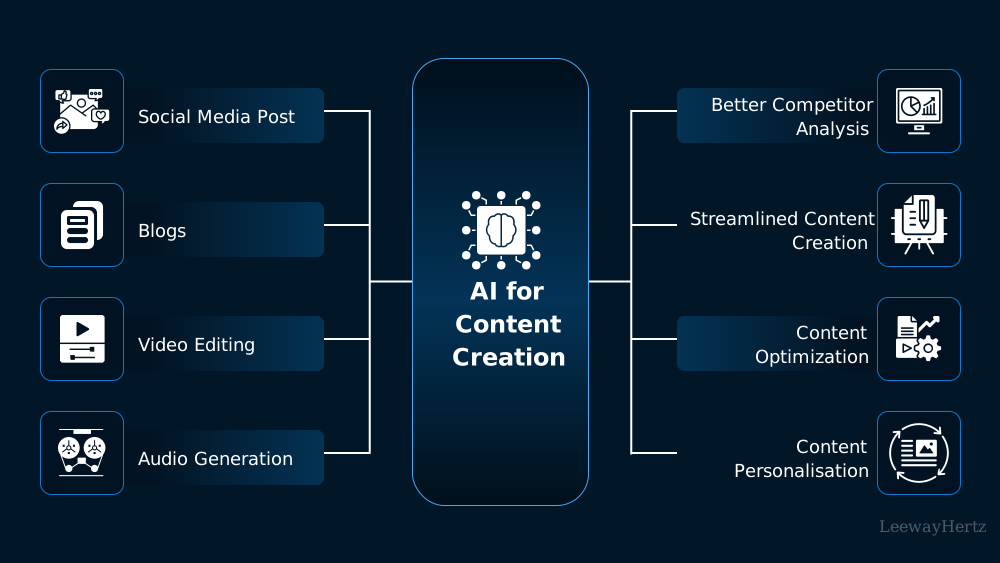
Keyword research has also leveled up. AI can now analyze search intent, meaning it doesn’t just tell you what people are searching for, but why they’re searching for it. This is invaluable for creating content that truly addresses your audience’s needs. Tools now go beyond simple keyword volume and look at related questions, semantic search terms, and competitor analysis.
I've been experimenting with tools that analyze competitor content. They can identify the keywords your competitors are ranking for, the topics they’re covering, and the types of content they’re creating. This isn't about copying; it's about identifying opportunities to create something even better. It’s about finding the angles they’ve missed.
AI is great for broad search terms, but it often misses the mark on highly specific, long-tail keywords. I've found it needs manual refinement for niche queries. It’s a good starting point, but always double-check and refine the suggestions.
- Trend Analysis: Identify emerging themes within your niche.
- Content Gap Analysis: Discover topics your competitors haven’t covered.
- Search Intent Analysis: Understand why people are searching for specific keywords.
- Competitor Keyword Analysis: See what keywords your rivals are ranking for.
Prompting Techniques for Blog Ideas
- Persona-Based Brainstorming - Frame your prompt around a specific reader persona. This helps generate ideas tailored to a defined audience. Example: 'Generate 10 blog post ideas for a 30-something female entrepreneur interested in sustainable fashion.'
- 'Problem-Agitation-Solution' (PAS) Framework - Use the 'problem-agitation-solution' framework: 'Generate blog post ideas about remote work that highlight a common problem, agitate the pain points, and offer a potential solution.' This structure naturally leads to helpful, problem-solving content.
- Keyword Cluster Exploration - Leverage keyword research tools (like Semrush or Ahrefs) to identify related keywords and generate ideas. Example: 'Based on the keyword "minimalist skincare routine", generate 5 blog post titles and outlines.'
- Trend Jacking with a Niche Twist - Combine current trends with your blog's niche. Example: 'Generate blog post ideas that combine the current trend of 'quiet luxury' with the topic of budget travel.'
- 'How To' with Specificity - Focus on highly specific 'how-to' topics. Example: 'Generate blog post ideas for 'how to' guides related to using Canva for creating Instagram Reels.'
- Listicle Inspiration with a Unique Angle - Request listicle ideas, but add a constraint to make them more original. Example: 'Generate 7 listicle ideas about productivity tools, but each tool must be free or have a generous free plan.'
- Competitor Gap Analysis - Identify topics your competitors haven’t covered thoroughly. Example: 'Analyze blog content from The Everygirl and generate 5 blog post ideas that fill content gaps related to career advice for creative professionals.'
Drafting and Outlining: AI as Your Writing Partner
AI tools are now quite capable of assisting with the drafting process. They can generate outlines based on a given topic, create first drafts of blog posts, and even suggest different writing styles. However, it’s vital to remember that these are drafts. They require significant editing and refinement.
Overcoming writer’s block is a major benefit. If you’re staring at a blank page, AI can provide a starting point, a framework to build upon. It can generate different introductions, body paragraphs, or conclusions, giving you options to choose from. RightBlogger lists 87 AI tools for tasks like generating blog ideas and social media posts.
The biggest challenge is maintaining your brand voice. AI-generated content can often sound generic and impersonal. To combat this, I recommend feeding the AI examples of your previous writing. This helps it understand your style and tone. Then, meticulously edit the AI-generated text to inject your personality and perspective.
Many bloggers fear that AI will lead to homogenous writing, where everything sounds the same. This is a valid concern. The key is to use AI as a tool, not a crutch. Don't let it dictate your voice; let it enhance your ability to express it. The human touch is what sets your blog apart.
Authenticity Check: Avoiding AI-Generated Content Pitfalls
This is where things get serious. Relying too heavily on AI-generated content carries significant risks. Google is actively working to identify and penalize low-quality, AI-spun articles. The penalties can range from lower search rankings to complete de-indexing. More importantly, you risk losing the trust of your readers.
Identifying AI-generated content is becoming increasingly difficult, but there are still telltale signs. Look for repetitive phrasing, unnatural sentence structures, and a lack of original insight. AI often struggles with nuance and complexity. However, Google's detection algorithms are improving rapidly, making it harder to fool the system.
I’ve tested several AI detection tools, and frankly, the results are mixed. Some are surprisingly accurate, while others generate false positives. They shouldn’t be relied upon as the sole determinant of authenticity. The best approach is to focus on creating high-quality, original content that provides genuine value to your audience.
Here's my advice: treat AI-generated content as a starting point, not a finished product. Always edit, rewrite, and add your own unique perspective. Fact-check everything. Ensure the content aligns with your brand voice and values. And most importantly, prioritize quality over quantity. A few well-written, original articles are far more valuable than dozens of AI-generated ones.
- Edit meticulously: Don't just publish AI-generated text as is.
- Fact-check everything: AI can sometimes generate inaccurate information.
- Add your unique perspective: Inject your personality and expertise.
- Prioritize quality over quantity: Focus on creating valuable content.
- Use AI detection tools cautiously: They are not foolproof.
Image and Visual Content Creation with AI
AI isn't just for text anymore. There's a growing number of tools that can generate images, graphics, and even videos for your blog. These tools can be incredibly useful for creating visually appealing content, especially if you lack design skills or a budget for stock photos.
However, using AI-generated visuals raises ethical considerations. Copyright is a major concern. Who owns the rights to an image created by AI? The answer is often unclear. There are also concerns about deepfakes and the potential for misuse. It's important to be mindful of these issues and use AI-generated visuals responsibly.
I've been impressed by tools that can create custom illustrations and infographics. These can be a great way to visualize data or explain complex concepts. However, it’s important to ensure the visuals are accurate and visually appealing. Don’t just rely on the AI to do everything; add your own creative touch.
When choosing AI image generators, consider the licensing terms and the quality of the output. Some tools offer royalty-free images, while others require attribution. Experiment with different prompts and settings to achieve the desired results.
SEO and AI: What’s Changed (and What Hasn’t)
and penalize low-quality, AI-generated content. The focus is on rewarding content that is original, informative, and engaging. Keyword stuffing and other black-hat SEO tactics are becoming less effective.
The key to SEO in 2026 is to create content that genuinely helps your audience. This means focusing on user intent, providing valuable information, and building authority in your niche. AI can assist with keyword research and content optimization, but it shouldn’t be used to game the system.
I’m not sure about the long-term effects of AI on keyword stuffing. It seems counterintuitive that AI would help with a practice Google actively discourages. However, it's possible that AI could be used to create more subtle and nuanced forms of keyword optimization. It's an area I'm watching closely.
Google’s Helpful Content Update, and subsequent algorithm tweaks, have made it clear that quality and originality are paramount. AI-assisted content is fine, as long as it meets these criteria. The goal is to create content that people want to read and share, not just content that ranks well in search results.
Content Creation Strategies: A Comparative Analysis (2026)
| Strategy | SEO Risk | Authenticity | Time Investment | Cost |
|---|---|---|---|---|
| Fully AI-Generated | High | Low | Very Low | Low to Moderate |
| AI-Assisted (Idea Generation & Outline) | Moderate | Moderate | Low to Moderate | Low |
| AI-Assisted with Heavy Editing | Moderate to Low | Moderate to High | Moderate | Moderate |
| Human-Written with AI Fact-Checking | Low | High | High | Moderate to High |
| Human-Written with AI for Keyword Research | Low | High | Moderate | Low |
| AI-Powered Paraphrasing & Rewriting | Moderate | Moderate | Low | Low to Moderate |
| Hybrid: AI Draft + Human Personalization | Moderate to Low | Moderate to High | Moderate | Moderate |
Illustrative comparison based on the article research brief. Verify current pricing, limits, and product details in the official docs before relying on it.
Hi, I'm Harirah Ismaila AKA RirahCreates.
— Harirah Ismaila. (@rirahcreates) April 12, 2026
I am an AI Content creator and Educator.
I'm currently hosting a 30 days AI content creation class where I'm teaching you how to create different AI content and monetize them.https://t.co/p3FtarJ54f
How about you? pic.twitter.com/o5wR0pz2OS
The Future of AI and Blogging: Trends to Watch
The future of AI in blogging is likely to be characterized by increased personalization and automation. We’ll see more tools that can tailor content to individual readers based on their interests and preferences. AI-powered content optimization will become even more sophisticated, helping bloggers maximize their reach and engagement.
I anticipate that AI will become more deeply integrated into blogging platforms, making it easier for bloggers to create and manage their content. We may see AI-powered writing assistants that provide real-time feedback and suggestions. The line between human and AI authorship will continue to blur.
Blogger Secret highlighted 7 AI tools that are transforming the blogging landscape in 2024, and I expect this trend to continue. These tools are helping bloggers streamline their workflows, improve their content, and grow their audiences. It’s a rapidly evolving field, and it’s important to stay up-to-date on the latest developments.
While the potential benefits of AI are significant, there are also challenges to consider. Maintaining authenticity, protecting intellectual property, and ensuring ethical use of AI will be crucial. The future of blogging will depend on our ability to harness the power of AI responsibly and creatively.




No comments yet. Be the first to share your thoughts!