
The reality of blogging in 2026
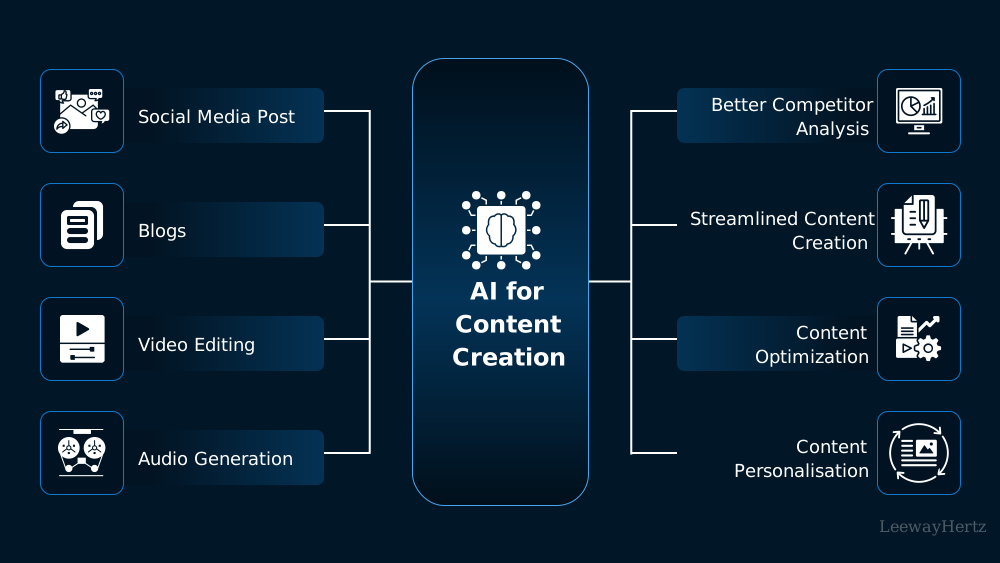
Blogging in 2026 is already looking dramatically different than it did even a few years ago. The rise of AI content creation tools is the biggest factor, and it’s causing both excitement and anxiety among bloggers. Initially, there was a lot of talk about AI replacing writers, but that narrative is shifting. The more realistic picture is one where AI serves as a powerful assistant, augmenting a blogger’s existing skills and allowing them to scale their efforts.
We’ve seen AI writing tools evolve rapidly. Early iterations were essentially text spinners, capable of rewriting existing content but lacking originality. Now, we have sophisticated platforms that can generate entire articles, blog posts, and even marketing copy from scratch. The quality varies, of course, but the improvements have been significant. It's not about replacing the human element, it’s about enhancing it.
Predicting the future is always risky, especially in a field moving as quickly as AI. But looking at current trends, we can anticipate continued advancements in natural language processing and machine learning. This will lead to AI tools that are even more capable of understanding context, adapting to different writing styles, and generating truly original content. The key for bloggers is to embrace these tools and learn how to use them effectively.
The fear of being obsolete is understandable, but I believe the human touch will remain essential. Readers connect with authenticity, personality, and unique perspectives – qualities that AI currently struggles to replicate. The successful bloggers of 2026 will be those who can skillfully blend AI assistance with their own creativity and expertise.
Why all-in-one platforms are winning
RightBlogger is a good example of the shift toward consolidated tools. I've watched the platform evolve from a simple set of writing prompts into a full dashboard that handles keyword research and social scheduling in one tab. It beats paying for four different subscriptions like Jasper, Semrush, and Buffer just to get a single post out the door.
RightBlogger, for example, offers features like AI-powered article writing, keyword research, and content optimization. This contrasts with a 'point solution' approach, where you might use Jasper for writing, Semrush for SEO, and Buffer for social media. The benefit of an all-in-one is a unified interface and data flow, potentially saving significant time and effort.
A typical day for a blogger using RightBlogger might involve generating an initial draft of a post with AI, then refining it with their own voice and expertise. They could then use the platform’s SEO tools to optimize the content for search engines and schedule it for publication. This is a marked difference from the more fragmented process of managing multiple tools.
However, relying on a single platform isn’t without its downsides. You become dependent on that platform’s features and pricing. If the platform changes its policies or discontinues a feature you rely on, you could be left scrambling. There’s also the risk of "feature bloat’ – the platform trying to do too much and ending up doing nothing particularly well. It"s important to weigh these factors carefully before committing to an all-in-one solution.
- Drafting tools to break through the blank page phase
- Keyword research: Identify relevant keywords to target.
- SEO optimization: Improve content for search engine rankings.
- Social media scheduling: Automate social media promotion.
AI Tools for Bloggers
- Jasper - A widely used AI writing assistant capable of generating blog posts, social media content, and marketing copy. It offers various templates and a 'Boss Mode' for longer-form content creation.
- Surfer SEO - Focuses on SEO-driven content creation. It analyzes top-ranking content for target keywords and provides data-driven recommendations for content structure and keywords to include.
- Scalenut - An AI-powered SEO and content marketing platform. It assists with keyword research, content planning, and AI writing, aiming to streamline the entire content lifecycle.
- Rytr - A more affordable AI writing tool, suitable for generating various content types, including blog ideas, outlines, and full articles. It offers multiple tones and use cases.
- Copy.ai - Specializes in generating marketing copy, but can also be used for blog content. It provides a range of tools for brainstorming, writing, and refining content.
- Frase.io - An AI-powered content optimization tool that helps research, write, and optimize content for search engines. It analyzes search results to identify key topics and questions to address.
- Grammarly - While not solely an AI content *creator*, Grammarly’s AI features provide real-time feedback on grammar, clarity, and tone, essential for polishing AI-generated content. GrammarlyGO offers generative AI capabilities.
Content Pillars & AI: A New Workflow
Content pillars are foundational pieces of content that cover a broad topic in depth. Think of them as comprehensive guides or ultimate resources. They form the core of your content strategy, and smaller pieces of content are created around them. For those unfamiliar, a content pillar is a long-form, authoritative piece of content on a core topic. It's then supported by numerous related pieces.
AI can be incredibly helpful in supporting a content pillar strategy. For example, AI tools can assist with keyword research to identify relevant topics for your pillar content. They can also generate initial outlines, providing a starting point for your writing. This can save a significant amount of time and effort, especially when tackling complex subjects.
Perhaps even more valuable is AI’s ability to repurpose pillar content. A single pillar piece can be broken down into numerous smaller pieces – social media posts, email newsletters, infographics, short videos, and more. AI can automate much of this process, generating variations of the content tailored to different platforms. This maximizes the reach and impact of your pillar content.
However, it’s crucial to remember that AI is a tool, not a replacement for strategic thinking. A well-defined content strategy should come before you start using AI. AI can accelerate the process, but it can’t create a strategy on its own. The best approach is to use AI to enhance and amplify your existing efforts, not to dictate them.
Keeping your voice in a sea of bots
The biggest concern surrounding AI content creation is the potential loss of authenticity. If everyone is using the same tools to generate content, will everything start to sound the same? Will blogs lose their unique voice and personality? These are valid concerns, and maintaining authenticity is paramount.
One way to combat generic-sounding content is to rigorously edit and fact-check everything AI generates. Don’t simply copy and paste – treat AI-generated text as a first draft. Add your own insights, opinions, and experiences. Infuse the content with your unique voice and perspective. This is where the human element truly shines.
I've found that the only way to keep a blog from feeling like a manual is to inject specific failures. AI can explain how to bake a cake, but it can't tell the story of the time I burnt my kitchen down trying to make a souffle. Those specific, messy details are why people actually subscribe.
While 'authenticity scores' are being explored by some companies, I believe the most effective approach is simply to focus on creating high-quality, original content that reflects your brand’s values and personality. Use AI to refine your writing, improve your SEO, and streamline your workflow, but never at the expense of your authenticity. Always prioritize genuine connection with your audience.
- Edit rigorously: Treat AI-generated text as a first draft.
- Specific stories that only a human could actually experience
- Infuse your voice: Don’t be afraid to let your personality shine.
- Prioritize originality: Focus on creating unique content.
How Authentic is Your AI-Generated Content?
AI tools are rapidly changing the blogging landscape, offering incredible potential for scaling content creation. However, maintaining authenticity is crucial for building trust with your audience and preserving your brand voice. This quiz will help you assess how well your AI-assisted content aligns with your personal brand and editorial standards.
AI Tools for Specific Blogging Niches
The effectiveness of AI tools can vary significantly depending on the blogging niche. What works well for a fashion blog might be less useful for a travel blog, and vice versa. It's important to consider the unique challenges and opportunities of each niche.
For example, AI can be incredibly helpful for generating product descriptions for a fashion blog. It can quickly create compelling copy highlighting the features and benefits of different items. However, it might struggle to write a deeply personal travel story about a transformative experience. That requires a level of emotional intelligence and creativity that AI currently lacks.
In the lifestyle niche, AI can assist with tasks like creating meal plans, workout routines, and home decor ideas. In the beauty niche, it can generate ingredient lists, skincare routines, and makeup tutorials. The key is to identify tasks that are repetitive or time-consuming and leverage AI to automate them.
Travel blogging often relies on evocative language and personal storytelling. While AI can help with research and fact-checking, it’s unlikely to replace the need for a skilled writer who can capture the essence of a place. Similarly, in the fashion niche, AI can assist with trend analysis, but it can’t replicate the eye of a stylist or the creativity of a designer. Ultimately, AI is a tool to augment, not replace, human expertise.
AI Tool Suitability by Niche
| AI Task | Lifestyle | Beauty | Travel | Fashion |
|---|---|---|---|---|
| Keyword Research | High | High | High | High |
| Outline Generation | High | Medium | High | Medium |
| Content Writing | Medium | Medium | Medium | Medium |
| Image Creation | Medium | High | High | High |
| Social Media Copy | High | High | High | High |
Illustrative comparison based on the article research brief. Verify current pricing, limits, and product details in the official docs before relying on it.
Beyond Writing: AI for SEO & Promotion
AI’s potential extends far beyond content creation. It can also be a powerful tool for SEO and promotion. AI-powered tools can assist with keyword research, identifying relevant terms to target and analyzing search volume. They can also optimize meta descriptions and title tags to improve click-through rates.
Link building, a crucial aspect of SEO, can also be streamlined with AI. Tools can identify potential link partners and even automate outreach efforts. Of course, it’s important to maintain a personalized approach to outreach, but AI can significantly reduce the time and effort involved.
Social media promotion is another area where AI can excel. AI tools can schedule posts, analyze engagement metrics, and identify trending topics. Some platforms can even generate social media captions and hashtags automatically. This allows bloggers to maintain a consistent social media presence without spending hours each day.
The goal isn’t just to write faster; it’s to work smarter across the entire blogging workflow. AI can automate repetitive tasks, freeing up your time to focus on more strategic activities like content planning, audience engagement, and brand building. It’s about leveraging AI to maximize your impact and achieve your blogging goals.




No comments yet. Be the first to share your thoughts!